Ground Penetrating Radar Vs Electronic Locating: Which Do You Need?
Before you break ground on a Coffs Harbour site, the real question isn't whether you need underground detection — it's which method. Ground penetrating radar and electronic cable and pipe locating solve different problems, and picking the wrong one (or only one, when the project needs both) is how live services and non-conductive assets get missed.
Quick Answer: GPR vs Electronic Locating — What's the Difference?
Electronic cable and pipe locating traces conductive assets — live cables, metal pipes and anything else that carries or induces a signal — by sending a current through the line and following it with a receiver. Ground penetrating radar (GPR) does something different: it sends radar pulses into the ground and reads what bounces back, which means it can image concrete, asphalt, plastic pipe, conduit and voids that carry no signal at all.
The short version contractors actually need before they dig: if it's metal or live, electronic locating usually finds it fastest and most precisely. If it's non-metallic, non-conductive, or you're scanning through a slab rather than open ground, GPR is often the only method that will show it.
How Electronic Cable & Pipe Locating Works
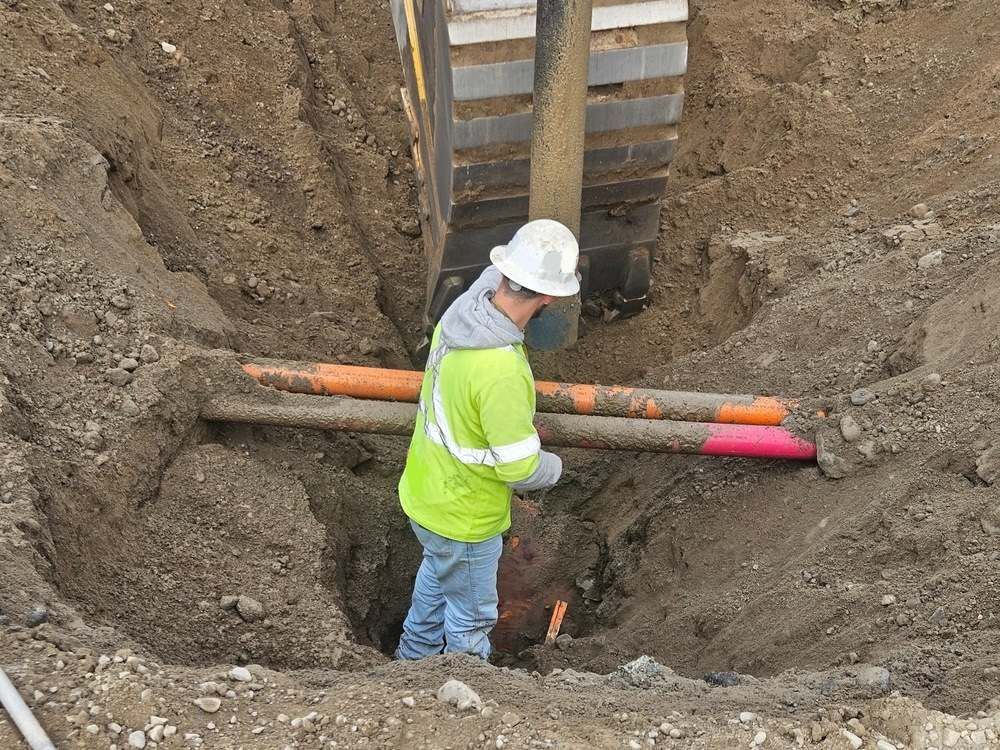
Electronic cable and pipe locating uses radio detection to trace conductive assets — making it the preferred method for identifying live cables and metallic pipes. A signal is applied to the line, either by direct connection or by induction, and a handheld receiver traces that signal along its path and estimates depth as it goes.
This is the workhorse method for standard pre-excavation checks: council-owned cables, telecommunications lines, metal water and gas pipes. It's fast, accurate on conductive assets, and it's the method behind most routine dial-before-you-dig style locates. For a deeper look at why locating is non-negotiable before any dig, read our post on Why Every Excavation in Coffs Harbour Needs Electronic Cable & Pipe Locating.
Where it comes up short is anything that doesn't conduct a signal. Plastic and PVC pipe, fibre-optic conduit without a trace wire, abandoned or de-energised lines, and voids or subsurface structures are effectively invisible to a purely electronic sweep.
How Ground Penetrating Radar (GPR) Works
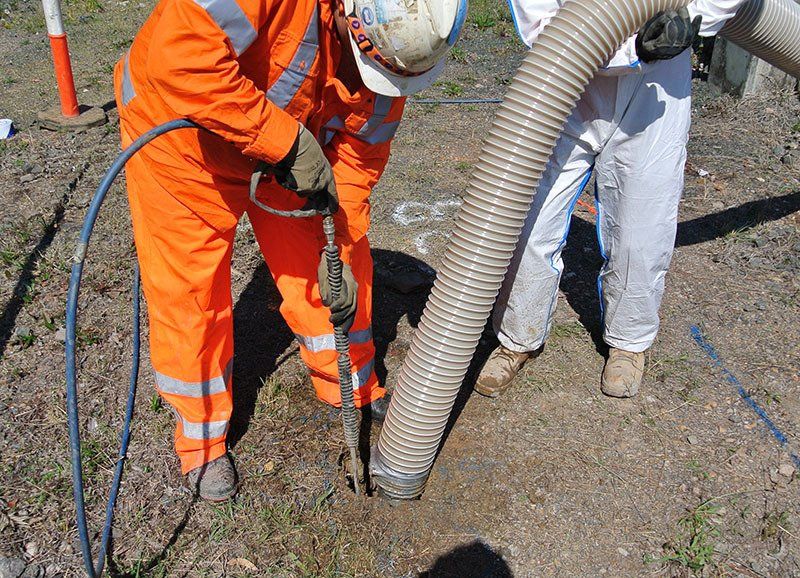
Ground penetrating radar for Coffs Harbour projects relies on a different principle entirely. A GPR unit is pushed across the surface, sending radar pulses into the ground and reading the reflections that bounce back when the signal hits a change in material — a pipe, a slab edge, a void, a change in soil density. Because it reads physical changes rather than conductivity, it doesn't care whether the target is metal, plastic, or nothing at all.
For projects involving concrete slabs, asphalt, or non-conductive assets, ground penetrating radar Coffs Harbour provides imaging that electromagnetic methods cannot. That makes it the standard choice for core drilling and slab-cutting jobs, locating PVC stormwater and sewer lines, confirming the depth and position of unmarked or abandoned services, and identifying voids or subsurface anomalies before footings go in.
The trade-off is that GPR takes more skill to interpret. The output is a radar image, not a straightforward tone-and-depth reading, so results depend heavily on the operator reading the data correctly against soil conditions and known site history.
Where the Two Methods Overlap — and Where They Don't
The overlap sits in the middle: metallic pipes and cables at shallow-to-moderate depth can often be picked up by both methods, which is part of why a site scanned with only one method can still return a partial picture. But the gaps run in opposite directions.
Electronic locating cannot see non-conductive materials or de-energised lines. GPR cannot easily distinguish what a target is made of, and it loses accuracy in heavily saturated clay or highly conductive soils, where radar penetration is limited regardless of operator skill. Neither method is a universal answer on its own, which is exactly why a site with mixed services — some metallic, some plastic, some sitting under a slab — needs both to get full coverage.
Which Method Does Your Project Actually Need?
For a straightforward open-ground excavation where the known services are metallic cables and pipes, electronic locating on its own is usually sufficient and faster to mobilise. For anything involving concrete or asphalt, suspected non-metallic pipe, or a site with an incomplete services record, GPR needs to be part of the scan regardless of what electronic locating turns up.
As a practical rule: if you can answer "is everything on this site metal or live" with a confident yes, electronic locating alone will usually do the job. If that answer is "probably" or "we're not sure", that uncertainty is the signal that GPR needs to be in the scope from the start, not added after something gets missed.
Why Some Projects Need Both
Larger developments, brownfield sites, and anywhere with an incomplete or outdated services record are the cases where relying on one method genuinely isn't good enough. For large development projects, a comprehensive utility survey package for Coffs Harbour often combines both GPR and electronic locating for complete underground coverage, giving contractors a single result that accounts for conductive and non-conductive assets alike.
Running both methods together also cross-checks the data: where electronic locating confirms a line's position and depth, GPR can confirm what else sits around it — a second pipe, a void, an unmarked structure — that a purely electromagnetic sweep would never surface.
Getting the Method Right Before You Dig
The real cost of guessing wrong isn't the scan fee — it's a struck service, a delayed program, or a redesign once something unmarked turns up mid-dig. Electronic locating and GPR each answer a different question about what's under the ground, and most sites need to know the answer to both before the first cut goes in. If you're not certain which applies to your site, that's a five-minute conversation worth having before mobilising equipment, not after.
FAQs
Is GPR better than electronic locating?
Neither is better — they detect different things. Electronic locating is faster and more precise for conductive assets like live cables and metal pipes, while GPR is the only method that reliably images non-conductive materials, voids and subsurface structures.
Can GPR detect plastic pipes?
Yes. Because GPR reads reflected radar pulses rather than conductivity, it can detect PVC, plastic and other non-metallic pipes that electronic locating would miss entirely.
Does electronic locating work through concrete?
It can locate conductive assets beneath concrete if there's a traceable signal path, but it won't image the slab itself or reveal non-conductive materials within it. GPR is the better tool for scanning through concrete or asphalt before coring or cutting.
Why would a site need both GPR and electronic locating?
Sites with a mix of metallic and non-metallic services, incomplete records, or concrete and asphalt surfaces need both methods to get complete coverage. Each method covers a gap the other one has.
How accurate is ground penetrating radar?
Accuracy depends on soil conditions and operator interpretation — GPR performs well in most soil types but loses penetration in heavily saturated clay or highly conductive ground. An experienced operator reading the radar image correctly is as important as the equipment itself.
Do I need a full utility survey or just a locate?
A standard locate is usually enough for routine excavation with known, mostly metallic services. A full utility survey, combining GPR and electronic locating, is worth it for larger developments, brownfield sites, or anywhere the existing services record isn't reliable.